Helping your kids learn verses

You don't need to be a Bible expert or have a perfect routine. A few minutes most days, a little fun and a lot of encouragement go a long way. Here are ideas that work at every age.

A family talking together at home

What helps at every age

Little and often

Five minutes a day beats an hour the night before club. Repetition is what makes it stick.

Say it out loud

Hearing and saying the words helps more than reading silently. Take turns saying it together.

Talk about what it means

Ask, "What do you think this verse is saying?" Kids remember what they understand.

Learn the reference too

Say the book, chapter and verse at the start and the end. It helps kids find it in their Bible later.

Learn it with them

When kids see you memorizing too, it becomes something your family does, not just homework.

Celebrate

High fives, a happy dance or a star on the fridge. Cheer the effort, not just the finish.

Tips by age

Puggles & Cubbies® (ages 2–5)

  • Echo it. Say a few words, then have them repeat. Add a few more each day.
  • Add hand motions. A motion for each phrase makes it easier to remember.
  • Sing it to a tune they know, like "Twinkle, Twinkle, Little Star."
  • Color it. Make a coloring sheet of their verse and fill in a star each time they say it.

Sparks® (K–2nd grade)

  • Chunk it. Learn one phrase at a time, then put them together.
  • Act it out. Turn the verse into a quick skit or silly voices.
  • Play the verse game. Build the verse, find missing words, then say it as words disappear.
  • Leave sticky notes with the verse on the mirror or in a lunchbox.

T&T (3rd–6th grade)

  • Write it out a few times. Writing builds memory.
  • Try the first-letter trick. Write only the first letter of each word and use it as a cheat sheet.
  • Print a puzzle: a word search, fill-in-the-blank or scramble.
  • Teach it to a younger sibling. Teaching is one of the best ways to learn.

Trek & Journey® (middle & high school)

  • Make it their lock screen so they see it every day.
  • Record a voice memo and play it in the car or on a walk.
  • Say it in their own words first, then word for word.
  • Ask how it fits their life: school, friends, worries. Teens remember what matters to them.

Fit it into your day

No extra time needed. Tie the verse to something you already do.

Car rides

Say it together on the way to school or practice.

Mealtimes

Go around the table and have everyone say it before you eat.

Bath and brushing teeth

Write it on the mirror with a dry-erase marker.

Bedtime

Say it as part of prayers. It's a great last thought of the day.

Kids laughing together in a circle with a leader

On the hard weeks

Some weeks the verse just won't stick, or life gets busy and you don't practice at all. That's okay. Every family has those weeks.

Try going back to a verse they already know to build confidence, or break the new one into even smaller pieces. Keep it light and loving. The goal isn't a perfect handbook. It's kids who know God's Word and know they're loved.

Free tools to practice

Pick your child's verse from their handbook, and each tool fills it in for you.
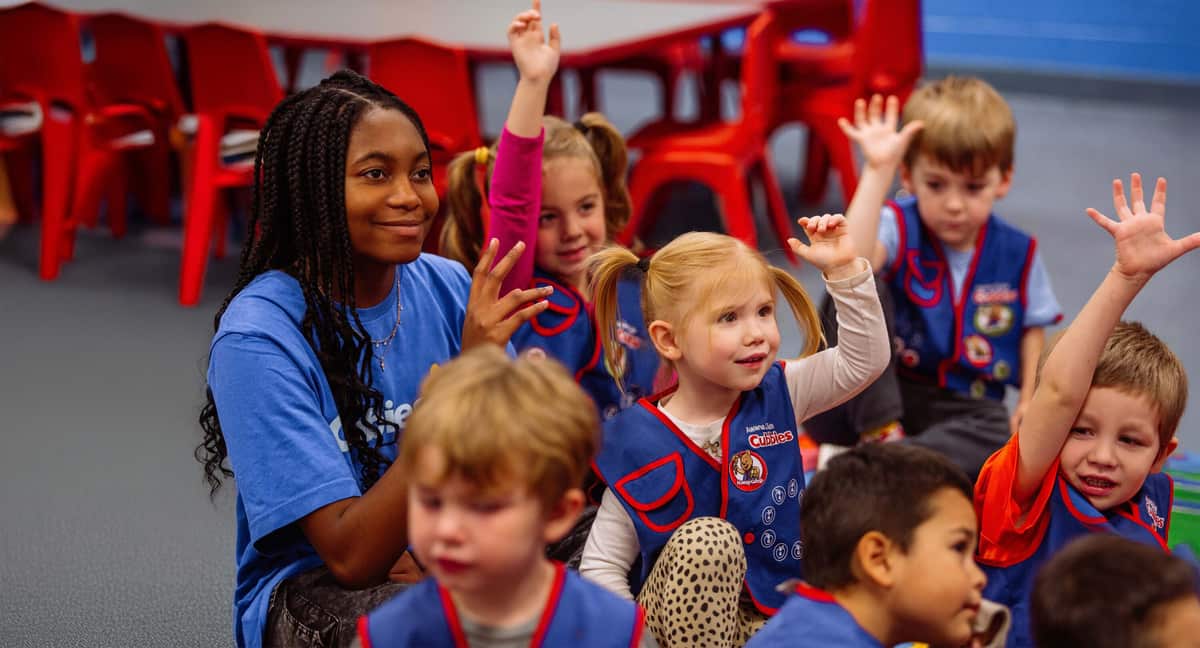
Young kids at an Awana Cubbies club

Verse Coloring Sheets

Big bubble letters and a picture to color. Best for Cubbies® and Sparks® kids.

Kids playing with a rainbow parachute

Verse Game

Three quick games on a phone or tablet to build, fill in and say the verse.

Kids enjoying a Bible lesson at church

Verse Puzzles

Print a word search, fill-in-the-blank or word scramble of any verse.